
Vestibular Therapy: Why Movement is the Key to Sitting Still
Vestibular Therapy: Why Movement is the Key to Sitting Still
May 19, 2026
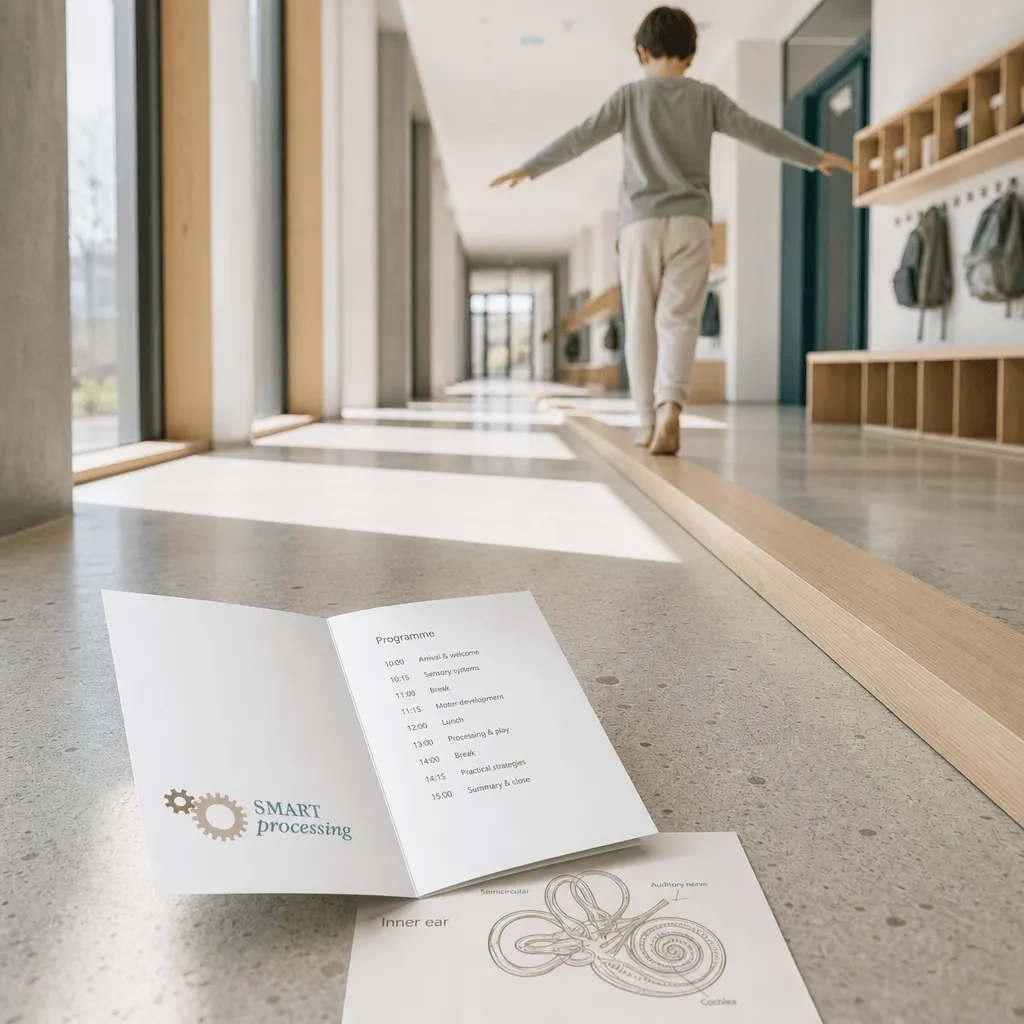
If your child struggles to sit still, focus in class, or keep up with reading, you might assume it's purely a behavioural issue or a sign of ADHD. But what if the real answer lies somewhere far more physical? What if their brain simply hasn't received the right signals from their body yet?
This is where vestibular therapy comes in, and it's one of the most overlooked tools in supporting children with learning difficulties.
What Is the Vestibular System, and Why Does It Matter?
The vestibular system lives in the inner ear. It's responsible for your sense of balance, spatial orientation, and the relationship between movement and gravity. When it functions well, you can sit upright without thinking, track words across a page without losing your place, and hold your attention steady for long enough to absorb new information.
When it doesn't function well, the effects can ripple outward in ways that look nothing like a balance problem on the surface. Children may appear restless or distracted. They might resist sitting at a desk, struggle with handwriting, or find reading physically uncomfortable. Their brain is essentially working overtime trying to manage basic physical orientation, leaving fewer resources available for learning.
This is why movement isn't the enemy of focus. For many children, it's actually the path to it.
The Connection Between Movement and Learning
Neuroscience has given us a much clearer picture of how the body and brain work together. The brain doesn't process movement and learning in separate, unconnected compartments. Motor development and cognitive development are deeply intertwined, particularly in early and middle childhood.
Research into neuroplasticity, the brain's ability to change and build new connections throughout life, confirms that targeted physical input can genuinely reshape how the brain functions. When a child receives consistent, structured movement experiences that challenge their balance, coordination, proprioception (the body's sense of its own position in space), and timing, their nervous system becomes better organised. A better-organised nervous system means better attention, better reading, and better learning outcomes overall.
Proprioception and timing are often underappreciated here. A child who can't accurately judge where their body is in space, or who struggles with rhythmic timing, will often find it harder to sequence sounds, which is a core skill in reading and phonics.
What Vestibular Therapy Actually Looks Like
Structured vestibular therapy isn't simply sending children outside to run around (although physical play is always valuable). It's a targeted, progressive programme that works on specific neurological pathways through carefully designed movement activities.
The Movement Programme® is exactly this kind of structured intervention. It's a 12-week programme with a proven track record, designed to improve balance, coordination, vestibular function, proprioception, and timing in school-age children. The outcomes parents and practitioners report go well beyond physical confidence. Improvements in reading, learning, and sustained attention are consistently noted because the underlying neurological groundwork is being strengthened.
What makes this particularly practical for UK families is that it's delivered at home. There's no need for specialist clinic visits or rearranging school schedules around appointments. The programme fits into everyday life, which also means children complete it in a familiar, comfortable environment where they're more likely to engage willingly.
How Movement Connects to the Bigger Picture of Learning Support
For many children, vestibular and sensory processing challenges don't exist in isolation. They frequently sit alongside reading difficulties, auditory processing challenges, or diagnoses such as dyslexia and ADHD. This is why a layered approach to support tends to produce the most significant results.
Alongside The Movement Programme®, we also offer The Listening Program®, a music-based auditory therapy that works to bring the auditory system into balance, reduce stress responses, and support sensory integration. When the auditory and vestibular systems are both functioning more effectively, the difference in a child's ability to process language and follow instructions can be quite remarkable.
For children who need targeted support with reading and literacy specifically, Fast ForWord® addresses the root causes of reading and learning challenges by building core cognitive skills including phonological processing, working memory, sustained attention, phonemic awareness, and academic vocabulary. Fast ForWord has helped many children with dyslexia, specific learning difficulties, and ADHD make one to two years of learning progress in just 40 to 60 hours of use.
For children who have completed Fast ForWord and are ready to build on that foundation, Clear Fluency is a separate, standalone programme that follows on from the Fast ForWord exercises. Using patented speech technology, the student reads aloud to the computer, which then provides corrective feedback in real time. It's a powerful next step for consolidating reading fluency and accuracy.
Practical Signs That Vestibular Support May Help Your Child
It's worth considering whether a structured movement programme could be beneficial if your child regularly shows any of the following:
Poor balance or clumsiness that seems out of proportion to their age, difficulty sitting still or maintaining an upright posture at a desk, a tendency to lean heavily on furniture or slump when seated, sensitivity to movement (becoming easily dizzy or, conversely, seeking out excessive spinning and rocking), challenges with tasks that require hand-eye coordination, and struggles to read smoothly or track lines of text without losing their place.
None of these signs on their own are cause for alarm, but they can point to a vestibular or sensory processing system that would benefit from targeted input.
Taking the Next Step
Every child's brain has the capacity to develop and grow. The science of neuroplasticity makes that clear. What matters is providing the right kind of structured input, consistently and at the right time.
Whether you're concerned about your child's balance and attention, their reading progress, or both, the programmes we offer at Smart Processing are grounded in neuroscience and backed by published research. We've been supporting children and adults across the UK since 2008, and we'd be glad to help you find the right starting point for your child.
Visit smartprocessing.co.uk to learn more about The Movement Programme®, Fast ForWord®, Clear Fluency, and The Listening Program®, or get in touch with Mary directly to ask questions and find out which programme best fits your child's needs.